Learning Outcomes:
i. Define latent learning and explain its role in acquiring knowledge without immediate reinforcement.
ii. Understand the example of a rat navigating a maze to illustrate how latent learning occurs.
iii. Appreciate the flexibility and adaptability that latent learning provides to organisms.
iv. Recognize the limitations of relying solely on observable behavior to assess learning.
Introduction:
Imagine a world where learning happens not just through trial and error or bells and food, but through a silent whisper, a hidden map etched in the mind even before its usefulness is revealed. This is the fascinating realm of latent learning, where knowledge quietly accumulates without immediate rewards or obvious demonstrations of skill. In this lesson, we'll embark on a journey into the maze of a rat's mind, guided by the principles of latent learning and understanding its remarkable role in shaping behavior.
i. The Rat and the Unrewarding Labyrinth: A Silent Map Takes Shape
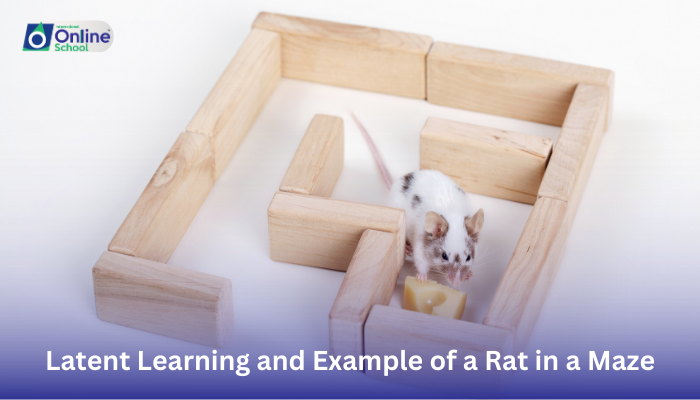
Picture a curious rat exploring a complex maze, its whiskers twitching, its nose sniffing every corner. No food awaits at the end, no reward guides its path. Yet, with each exploration, the rat learns. It remembers the dead ends, it maps the turns, it constructs a mental blueprint of the maze even though it has no immediate benefit. This is the essence of latent learning: knowledge acquisition without reinforcement, a silent map drawn in the mind, waiting for the day it becomes useful.
ii. From Shadows to Light: The Revelation of the Map
Now imagine, after weeks of unrewarded exploration, the rat is suddenly offered a delicious treat at the end of the maze. Suddenly, the silent map comes alive. The rat, without hesitation, navigates the labyrinth with newfound speed and efficiency. Its previous exploration, though seemingly unproductive, has equipped it with the knowledge needed for success. This revelation of the hidden map highlights the remarkable power of latent learning: it allows organisms to acquire knowledge and build mental representations even when the immediate benefits are unclear.
iii. The Advantages of a Hidden Path: Flexibility and Adaptability
Latent learning provides several advantages. It allows organisms to be ready for future opportunities they might not even anticipate. The rat, equipped with its mental map, can adapt to changes in the maze, navigate shortcuts, and even escape when the exit is moved. This flexibility and adaptability are crucial for survival and success in a complex and ever-changing environment.
iv. Beyond the Maze: Latent Learning in the Real World
Latent learning isn't just a phenomenon of rats and mazes. It plays a vital role in human learning as well. Imagine a child observing adults interacting with technology, soaking in information even before they can themselves operate the devices. This quiet acquisition of knowledge prepares them for future learning and allows them to quickly grasp concepts when the time comes.
Latent learning reminds us that learning isn't always a direct path with obvious rewards. Sometimes, the most valuable knowledge is acquired quietly, through observation and exploration, waiting for the right moment to shine. So, the next time you witness seemingly aimless behavior or encounter a sudden burst of understanding, remember the whispers of latent learning, a testament to the hidden depths of knowledge and the remarkable adaptability of the learning mind.
